Pages

Showing posts with label library. Show all posts

Monday, 25 November 2013

My library activity: Using Te Ara 3


Using Te Ara -
The Encyclopedia of New Zealand
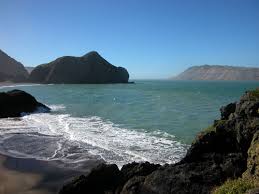
3. Manukau Harbour

L.I. Develop our knowledge of Auckland and the Tamaki river
Familiarise ourselves with an online NZ encyclopaedia

Use this link to open Te Ara
Enter Tamaki river into the search box and use the Harbours and wetlands page to answer these questions.

What two adjectives are used to describe the Manukau Harbour?
The two adjectives that were used to describe the Manukau Harbour wide and shallow.
What landforms are common in the harbour?
The landforms that are common in the harbour are mudflats and saltmarshes.
What two things about the Manukau Harbour have led to shipwrecks?
The two things that have led to shipwrecks are swells and sandbars.
What was the worst shipwreck on the Manukau bar?
The worst shipwreck on the Manukau bar was the HMS Orpheus which was held on the 7th February in 1863. 259 people were on board but 189 people drowned and it was remained as New Zealand’s worst maritime disaster.

My library activity: Using Te Ara 2


Using Te Ara -
The Encyclopedia of New Zealand
2. Tamaki River

L.I. Develop our knowledge of Auckland and the Tamaki river
Familiarise ourselves with an online NZ encyclopaedia

Use this link to open Te Ara
Enter Tamaki river into the search box and use the Eastern suburbs: Oraki  to the Tamaki estuary page to answer these questions.

Where does the river flow from and to?
The river flows from Mangere east to a tidal estuary on the Waitemata.
What was the link used by Maori called?
The link that was used by maori was called Otahuhu Portage.
What two bodies of water does it join?
The 2 harbours that join are  Manukau harbour and Waitemata harbour.
What sort of landform is Tāhuna Tōrea?
The Tahuna Torea is a landform of sandspit.
What is the name of the marina on the Tamaki river?
The name of the marina on the Tamaki river is called Half moon bay.
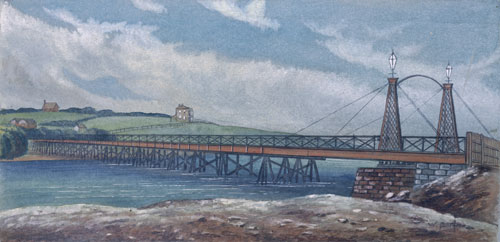
When was the first Panmure Bridge built?
The first Panmure Bridge was built in 1866.
When was the current bridge built?
The current bridge was built in 1959.

My library activity: Te Ara 1


Using Te Ara -
The Encyclopedia of New Zealand
1. Waitemata Harbour

L.I. Develop our knowledge of Auckland and the Tamaki River.
Familiarise ourselves with an online NZ encyclopaedia.
Use our skimming and scanning skills.

Use this link to open Te Ara
Enter Waitemata into the search box and use that page to answer these questions.

What sort of landform is the Waitemata harbour?
It is a drowned river valley which is stretched from Riverhead in the north west to Tamaki River in the east.

Why was it chosen to be New Zealand’s capital?
It was chosen to be New Zealand’s capital because of its tidal flats and the higher mangroves reaches to the west and sandy bays with sandstone cliffs along the eastern shores.

What does Waitemata mean?
The word Waitemata means obsidian waters.
Tell me one interesting fact about each of these features of the Waitemata:
Auckland’s chief port -  The Auckland’s port on the Waitemata was basic to the advance of the city and place.
Viaduct basin - The viaduct basin was the site of old fishing harbour which was redeveloped in the middle 1990’s as a site where the royal New Zealand Yacht Squadron could host the America's cup in 1999 and 2003.
Westhaven -  The Westhaven Marina, with 1,800 berths, is the largest managed marina in Australasia, and a symbol of Aucklanders’ love of sailing.
Harbour bridge - The Auckland Harbour Bridge (1,020 m long) was opened in 1959 to link the Auckland isthmus with the north.
Greenhithe bridge - The Greenhithe Bridge was built in 1975 as an alternative harbour crossing, spanning the upper Waitematā from Hobsonville to Greenhithe on the North Shore.
Natural features - Natural features of the Waitematā include Meola reef (also known as Te Tokoroa, meaning ‘a long reef’), a rocky sub-marine promontory.

Monday, 21 October 2013

My library activity


Using Te Ara -
The Encyclopedia of New Zealand
2. Tamaki River

L.I. Develop our knowledge of Auckland and the Tamaki river
Familiarise ourselves with an online NZ encyclopaedia

Use this link to open Te Ara
Enter Tamaki river into the search box and use the Eastern suburbs: Oraki  to the Tamaki estuary page to answer these questions.

Where does the river flow from and to?
The river flows from Mangere east to a tidal estuary on the Waitemata.
What was the link used by Maori called?
The link that was used by maori was called Otahuhu Portage.
What two bodies of water does it join?
The 2 harbours that join are  Manukau harbour and Waitemata harbour.
What sort of landform is Tāhuna Tōrea?
The Tahuna Torea is a landform of sandspit.
What is the name of the marina on the Tamaki river?
The name of the marina on the Tamaki river is called Half moon bay.
When was the first Panmure Bridge built?
The first Panmure Bridge was built in 1866.
When was the current bridge built?
The current bridge was built in 1959.

Monday, 14 October 2013

Te ara activity


Using Te Ara -
The Encyclopedia of New Zealand
1. Waitemata Harbour

L.I. Develop our knowledge of Auckland and the Tamaki River.
Familiarise ourselves with an online NZ encyclopaedia.
Use our skimming and scanning skills.

Use this link to open Te Ara
Enter Waitemata into the search box and use that page to answer these questions.

What sort of landform is the Waitemata harbour?
It is a drowned river valley which is stretched from Riverhead in the north west to Tamaki River in the east.

Why was it chosen to be New Zealand’s capital?
It was chosen to be New Zealand’s capital because of its tidal flats and the higher mangroves reaches to the west and sandy bays with sandstone cliffs along the eastern shores.

What does Waitemata mean?
The word Waitemata means obsidian waters.
Tell me one interesting fact about each of these features of the Waitemata:
Auckland’s chief port -  The Auckland’s port on the Waitemata was basic to the advance of the city and place.
Viaduct basin - The viaduct basin was the site of old fishing harbour which was redeveloped in the middle 1990’s as a site where the royal New Zealand Yacht Squadron could host the America's cup in 1999 and 2003.
Westhaven -  The Westhaven Marina, with 1,800 berths, is the largest managed marina in Australasia, and a symbol of Aucklanders’ love of sailing.
Harbour bridge - The Auckland Harbour Bridge (1,020 m long) was opened in 1959 to link the Auckland isthmus with the north.
Greenhithe bridge - The Greenhithe Bridge was built in 1975 as an alternative harbour crossing, spanning the upper Waitematā from Hobsonville to Greenhithe on the North Shore.
Natural features - Natural features of the Waitematā include Meola reef (also known as Te Tokoroa, meaning ‘a long reef’), a rocky sub-marine promontory.


Monday, 23 September 2013


`Using an index
L.I. - Library/Research skills
Using an index to find information quickly

Most non-fiction books have an index.  Like a table of contents, it lists the books contents and relevant page numbers, but in much more detail.  It presents the topics in alphabetical order to help your search.  Below is an example from a health book.

INDEX

aerobics                    2-14
breathing                 9-10
carbohydrates      36
co-ordination         20-25
cycling                       32
diet                              30-40
diseases                   45-65
doctor                       40-44
drinking                    63
drugs, harmful      70-75
drugs, medical       60-65
exercise                    11-20
fat                               35
fatigue                      76-79
good health            80-90
happy                       91-92
hospital                    40-44, 48-65
hygiene                    93-94


illness                           45-65
incapacitated           45-65
injuries                         60-65
inoculation                 96-98
lungs                             9-10, 60-64
medicine                      45-65, 96-98
mental illness            99-120
moods                          99-104
pharmacist                 60-65
physical activities     121-150
rest                                 151-155
self-discipline              115-120              
smoking                       121-124
sport                             15-20
strength                      12-14
vigour                           140-150
vitamins                       64-65
weight                           30-35

Before you start highlight 4 words you don’t know and look them up in the dictionary.
Fatigue: Tiredness
Incapacitated: Render incapable or unfit.
Inoculation: A treat (a person or animal) with a vaccine containing a dead or modified disease causing agent by injection to promote immunity against the disease.
Vigour: Energy, liveliness, strength.

Why are there two index entries for drugs?
There are two index entries for drugs because one of them is to do with harmful drugs and the other one is to do with medical drugs.

Which two entries will help you find out about tiredness and how to cope?
76, 79
Which pages would you turn to in order to find out about injuries?
60, 65
Which two entries would you use to find out more about healthy eating?
80, 90
Which pages would you turn to in order to find out about the bad effects of smoking?
70, 75
On which pages would you find out about hospital life?
40-44, 48-65
Why do you think there are two ranges of page numbers for lungs?
I think there are two ranges of page numbers for lungs because there are
On which pages would you find out more about the healthy effects of sport?
140, 150, 11- 20, 15


Library activity: Sub questions


Sub-questions

L.I. Thinking about sub-questions when researching

When you are looking for information there is always one main question that you have to answer.  Then, as you think about the main question and start reading other questions will occur to you.  These sub-questions give direction to your reading.  They keep you on track.  It is a strategy good readers use to help them locate information quickly.

Match (cut and paste) the main question with the sub-questions that relate

Question
Sub-questions
Subject: Film
What were the main reasons for the success of a movie that you have recently seen?  Write your own review of the movie.
 How effective was the cinematography?What type is it, adventure, crime, comedy, romance?  What was it’s storyline?  What was the complication and the interesting consequences?  Were the actors convincing?
Subject: History
What was life like in your town or suburb at the beginning of the 20th century?
What aspects (transport, communication, work) were different in the past?  What aspects have stayed the same?  How has entertainment changed or stayed the same?  What are the most notable buildings from this time?
Subject: Geography
Why has the grey nurse shark become the only protected species of shark?
What does this species look like?  Does it deserve a dangerous reputation?  Why was it hunted so freely in the past?  Why is it now on the endangered list?  Why has it become the world’s first protected shark?  
Subject: Social studies
How do farmers manage the land to prevent soil erosion?
Why is it such a concern?  What are the effects on a farm of soil erosion?  How can erosion from water be controlled?  How can windbreaks help?  Why is it important to keep plant growth in the soil?  How can farmer protect the soil during dry periods?
Subject: Media Studies
What do you think are the qualities of a successful TV series for teenagers?
What do teenagers want from their series?  Why are the relationships between characters so important?  What settings are favoured?  What qualities do the lead actors have?   Why do some local series do well overseas?
Subject: Reading
Why is a major complication essential to a novel?  Show how is has affected the plot and the development of major characters in a novel you have read.
What was it’s nature: was it a particular event that had great impact on the main character?  How did this give excitement and interest to the novel?  How did it affect other characters?


Monday, 26 August 2013

My Bibliography activity


How to write a Bibliography

L.I. - Know how to reference a book correctly

When we are doing research we need to find corroborating sources of information.  A good way to do this is to find a book and a website that give you the same information.  This means that the information in most likely to be accurate.
At the end of the presentation it is important to cite the books and websites you have used.  This activity shows you how to present the book. information.


**
**

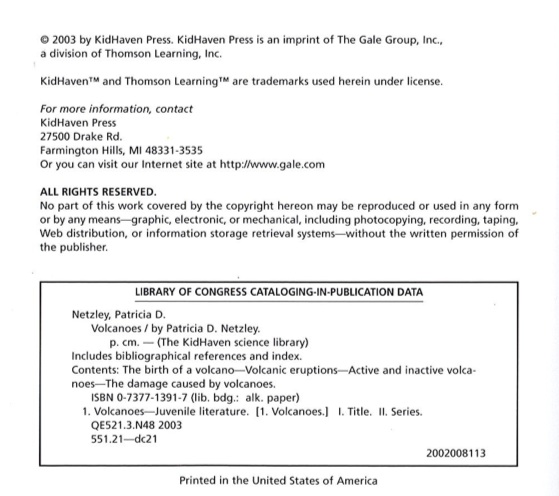
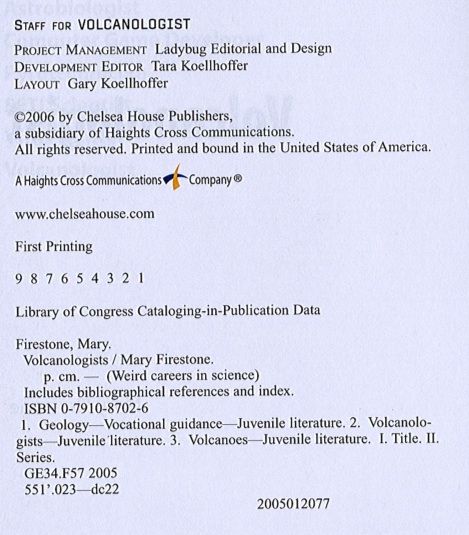
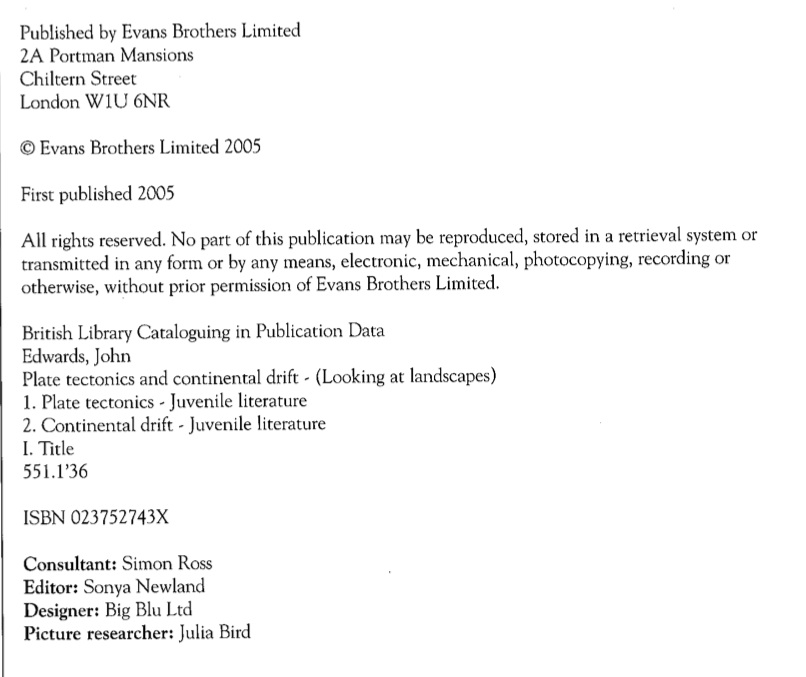
Using the scans from books used in our volcanoes unit, write the bibliography entry.

Surname, First name. (year) Title. Publisher: Place of publication

1. Edwards, John. ( 2005) PLate tectonics and continental drift. Evans Brothers limited, London ⎷

2. Netzley, Patricia D (2003) Volcanoes. KidHaven Press, Farmington Hills⎷    

3. Firestone, Mary (2006) Volcanologists, Chelsea House Publishers: USA ⎷

4.  Rae, Allison (2005) Earthquakes and Volcanoes, Evans Brothers limited: London ⎷

Monday, 19 August 2013

Glossary library activity


A helping hand from the Glossary

L.I. - Library/Research skills
Using a glossary

Sometimes a book also has a glossary at the beginning or the end.  This gives short explanations of specialised or difficult terms used in the book.  The following is an example is from a book about the moon.

GLOSSARY

Albedo       

Asteroid  

Mare


Satellite

Sputnik 1


in astronomy, the reflective property of planets
a small rocky object found mainly in a belt or flat ring between the orbits of Jupiter and Mars; also called a minor planet because it is so small (the largest are only 200 km across).
a large flat plain on the moon caused by lava flows and marked by ridges, depressions and faults; all 14 maria are on the side of the moon that faces Earth.
a natural (e.g. moon) or artificial (e.g. spacecraft) object that orbits around a larger astronomical body.
the first artificial satellite, which was launched into space to orbit around the Earth in 1957.

Name an artificial satellite. Sputnik 1 ⎷
What is another term for a minor planet in orbit between Mars and Jupiter? Asteroid ⎷
What is the term for an object that orbits around another larger planetary body? Satellite ⎷
What is the term used for a large flat lava flow on the moon? Mare ⎷
What term is used to describe the characteristic light reflecting from a planet?  Albedo ⎷


Comment: This is my library activity which is to do with Glossary. I got all of my answers right because I used the glossary.

Tuesday, 26 February 2013

Our Library


Our Library
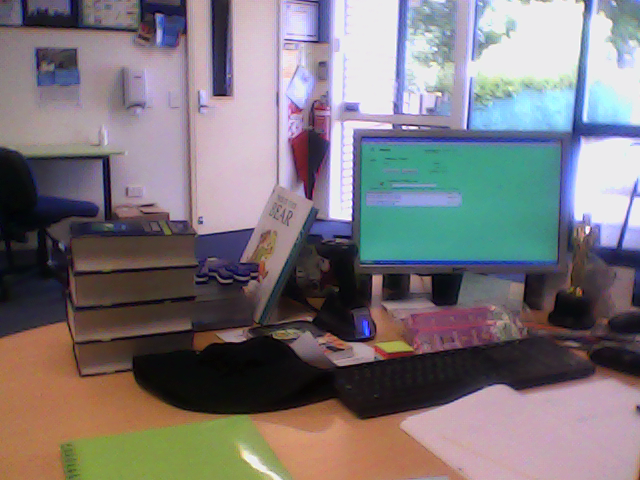
This is the table we use to issue and return the library books we borrow from there.


Magazines are there for kids and students who are interested in reading it.

These are the pictures books which are for the juniors to read because it has easy words for them to read.

This is the non fiction area which is organised into subjects.  They are full of facts.

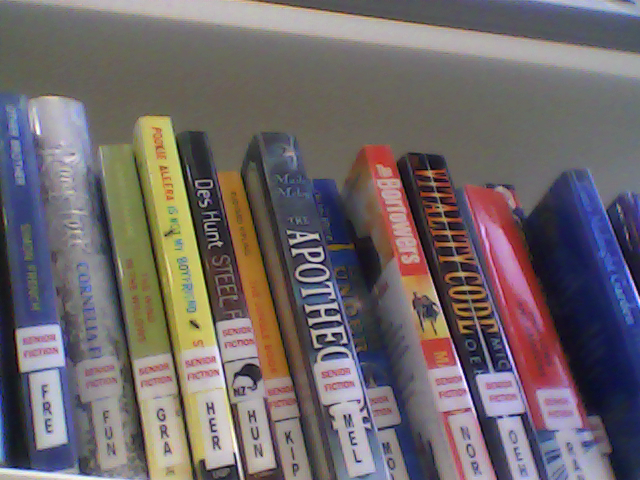
This area is where the senior fiction books are. The senior fiction books are there for the seniors who are very good at reading and know how to read big words.